

The Internet of Things is growing rapidly around the world. Today, many industries depend on digital technologies to improve efficiency and productivity.
In addition, in the era of digital transformation, the Internet of Things plays a key role in business innovation. This technology connects devices and allows them to exchange data automatically.
As a result, businesses can build smarter systems and improve operational efficiency. Furthermore, IoT technology helps companies create new services and digital solutions.
The Internet of Things (IoT) continues to evolve every year. Therefore, many organizations are starting to adopt IoT to simplify operations and improve user experiences.
What Is Internet of Things?
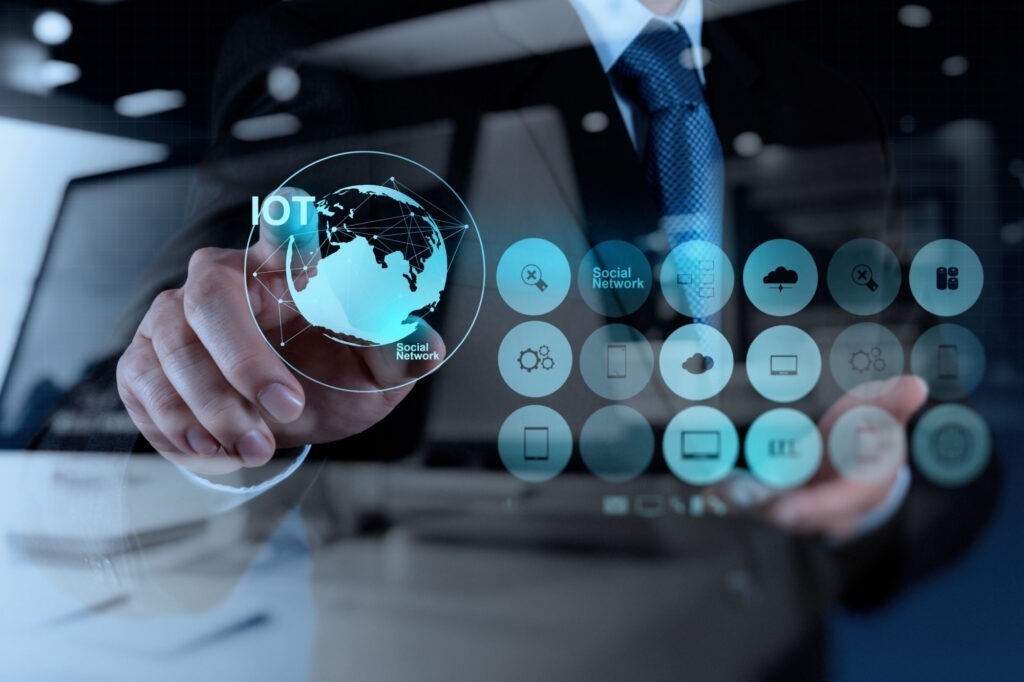
The Internet of Things refers to a network of physical devices connected to the internet.
These devices contain sensors, software, and other technologies. Because of this, devices can communicate and exchange data with other systems.
As a result, machines can perform tasks automatically without constant human involvement. However, humans still monitor and control the system.
IoT is also closely related to Machine-to-Machine (M2M) communication. For example, devices can send information directly to other systems without manual input.
Common IoT devices include:
-
smartphones
-
smart speakers
-
coffee machines
-
smart lights
-
robotic vacuum cleaners
-
smart TVs
Therefore, these smart devices help people perform tasks more efficiently.
Key Components of Internet of Things
The Internet of Things relies on several important components to function properly.
These components work together to collect data, process information, and deliver useful outputs.
Sensors
Sensors are one of the most important components of IoT systems.
A sensor collects data from the surrounding environment. For example, sensors can detect temperature, motion, light, or humidity.
Because of sensors, devices can respond to real-world conditions automatically.
Artificial Intelligence
Artificial Intelligence (AI) plays a critical role in IoT systems.
AI analyzes the data collected by IoT devices. Then it processes the information using algorithms and machine learning models.
As a result, systems can make smarter decisions and improve operational efficiency.
Connectivity
Connectivity allows IoT devices to communicate with each other.
Devices typically connect through the internet, wireless networks, or cloud platforms.
Stable connectivity is essential. Without it, IoT systems cannot exchange data effectively.
User Interface
The User Interface (UI) allows users to interact with IoT systems.
Through the interface, users can monitor device activity, receive alerts, and control devices remotely.
Examples include mobile applications, dashboards, and notification systems.
Applications of Internet of Things
The Internet of Things is used across many industries. This technology improves efficiency and creates smarter systems.
Below are some common IoT applications.
Energy Sector
IoT technology helps reduce energy waste.
For example, smart lighting systems use sensors to control electricity usage automatically. As a result, buildings can reduce unnecessary power consumption.
Similarly, smart home devices can schedule appliances such as air conditioners and washing machines.
Healthcare Industry
IoT also plays an important role in healthcare innovation.
Medical devices now use IoT technology to monitor patient health in real time.
Examples include:
-
MRI systems
-
vital sign monitoring devices
-
remote patient monitoring tools
These technologies help doctors monitor patients more effectively.
Transportation
The Internet of Things improves transportation systems in large cities.
Navigation applications such as Google Maps or Waze rely on IoT data.
Smartphone sensors collect traffic information and send it to cloud systems. The system then analyzes the data and provides alternative routes.
As a result, drivers can avoid traffic congestion and reach destinations faster.
Public Utilities and Environment
IoT also supports environmental monitoring and public infrastructure.
For example, water supply companies can install smart sensors on water meters.
These sensors monitor water usage and detect supply issues. In addition, the system helps companies understand consumer behavior and improve service quality.
Conclusion
The Internet of Things is transforming the way people interact with technology.
By connecting devices through the internet, IoT systems enable automation, data exchange, and smarter decision-making.
As IoT technology continues to evolve, it will play an even greater role in digital transformation across industries.
Businesses that adopt IoT solutions can improve efficiency, reduce costs, and create innovative services.
If you would like to learn more about digital technology solutions, visit Indonesiancloud.com.
In addition, businesses looking for reliable cloud infrastructure and hosting services can explore cloudhostingaja.com.
If you have questions about our products or services, feel free to contact our team. We will be happy to help support your digital transformation journey.