
Disaster Recovery is no longer optional. In Indonesia, risks are real. For example, extreme weather, floods, and power outages can stop operations. So businesses must be ready to recover. Otherwise, they are simply hoping nothing happens.
At the same time, companies rely more on digital systems. When apps go down, the impact spreads fast. As a result, even one hour of downtime can trigger a chain reaction.
Disruptions Are Becoming More Frequent
Extreme weather events are happening more often. As a result, logistics can be blocked. Power can fail. Offices can shut down.
However, the biggest question is not the event itself. The key question is how fast the business can recover.
The Real Cost of Downtime
When services stop, the impact rarely stays in one place. Instead, it spreads across the business.
- First, customer trust drops. If a service is down, customers may switch.
- Next, financial losses rise. Revenue pauses. Productivity slows. Opportunities slip away.
- Meanwhile, internal work becomes chaotic. Teams go into reactive mode. Decisions happen under pressure. As a result, technical issues quickly become business issues.
What Is Disaster Recovery?
Disaster Recovery is a set of strategies, processes, and technology that restore systems, data, and critical services after a major disruption. The disruption can come from natural disasters, operational incidents, or cyberattacks.
Prevention tries to avoid disruption. Disaster Recovery focuses on recovery.
Also, the goal is not just to “turn systems back on.” The goal is to restore critical services quickly, with minimal impact on customers and revenue.
Backups Are the Foundation. Disaster Recovery Completes Readiness.
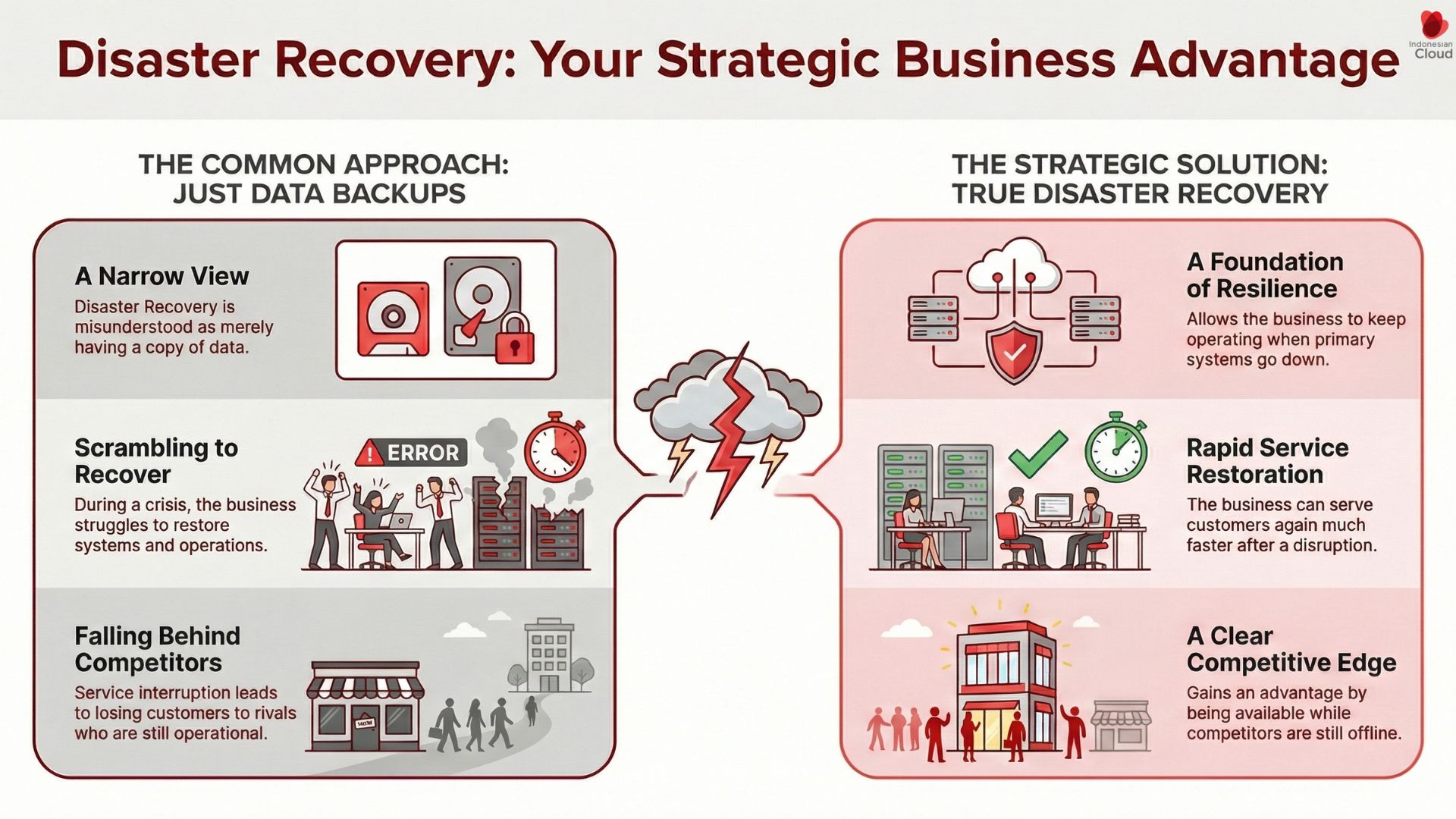
Data backups are a crucial first step. They protect data from human error, cyber threats, and system failures.
However, backups alone are often not enough in a major outage. In a crisis, the business needs more than saved files. It needs applications and services running again.
So the difference is simple:
- Backups store data.
- Disaster Recovery restores services and operations, with a clear plan.
Key Elements of Disaster Recovery Readiness
Strong Disaster Recovery needs a full system. Not just a document. There are three connected pillars.
1) A clear Disaster Recovery plan
The plan must define critical priorities. It must also set decision paths and communication flows.
To make it measurable, define:
- RTO: how fast services must return
- RPO: how much data loss is acceptable
2) Data that is ready to be restored
Data must be accessible when needed. Therefore, recovery speed matters. The longer it takes, the longer services stay down.
3) Prepared people and simple processes
Technology alone is not enough. Teams must be ready. Processes must stay simple. And regular drills matter. That way, execution stays steady under pressure.
Practical Steps to Start Disaster Recovery
If you are starting today, do this first:
- List your most critical services.
- Set RTO and RPO targets.
- Write a simple recovery runbook.
- Run regular recovery drills.
- Review results, then improve.
This way, Disaster Recovery stays active. It does not become a forgotten document.
Conclusion
Operational disruption is no longer an “if.” It is a “when.” Because of that, companies are judged by how fast they recover, not how big their infrastructure is.
Disaster Recovery is a strategic investment to protect services, customers, and revenue. Indonesian Cloud can help you build a reliable, measurable, and executable Disaster Recovery program.