
For the past six months, many professionals have discussed VMware Virtual SAN as a leading Software-Defined Storage solution. But what exactly is it, and why should you choose it over traditional storage?
If you look at the data storage industry, not much has changed in the last 10–15 years.
The Impact of Cloud Technology
Traditional storage still relies on dual controllers, RAID arrays, disks, hot spares, and cache. While technologies like SSD and auto-tiering improve speed, and compression or deduplication improve efficiency, they only extend outdated architectures.
Even modern hybrid or flash arrays still use the same old design—just with faster disks.
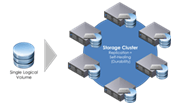
Cloud technology has changed expectations. Today, businesses rely on distributed systems that store multiple copies of data across locations. This model improves protection and availability. As a result, cloud-based architecture is now moving into mainstream storage.
Why VMware Virtual SAN Is Different
VMware Virtual SAN and hyper-converged systems follow a cloud-like architecture. They replace traditional RAID with distributed data protection.
This approach improves:
- Availability
- Performance
- Resilience
Instead of relying on complex RAID systems, Virtual SAN distributes data across multiple nodes. This design reduces failure risks and removes common weaknesses found in traditional storage.
In real-world scenarios, failures in RAID or dual-controller systems happen more often than expected. Because of this, the old concept of “designed not to fail” no longer works. Today, systems must be “designed for failure.”
Conventional vs. Modern Storage
When choosing a storage platform, companies must decide: stick with conventional systems or move to a modern approach.
Traditional systems are familiar but inefficient. Companies often add hot spares or use complex RAID setups, which increase costs and reduce efficiency.
Modern systems use commodity hardware like disks and SSDs. They distribute data across multiple independent nodes using a “shared nothing” architecture. This setup keeps data safe even if one or two nodes fail.
How VMware Virtual SAN Works
VMware Virtual SAN uses this distributed model and integrates it directly with the VMware hypervisor. This creates a storage platform optimized for virtual environments.
It also offers features that traditional storage cannot match, such as:
- Per-VM replication
- Per-VM snapshots
Because it runs inside the hypervisor, teams can manage everything in one place. This reduces complexity and lowers the need for specialized storage experts.
Cost and Efficiency Benefits
Virtual SAN can reduce capital expenses by 30–40%. Companies can also spend the same budget but gain better performance and flexibility.
Instead of overinvesting upfront, businesses can scale gradually based on actual needs.
Simpler Operations
Virtual SAN follows a “less is more” approach. It removes RAID, LUNs, and complex storage mapping.
VMware administrators can provision storage directly from the hypervisor. They no longer need separate storage processes.
It also moves key features like snapshots and replication from the LUN level to the VM level. This gives better control and reduces wasted storage capacity.
Scalable Growth Without Waste
Traditional storage often leads to over-purchasing. Companies buy more capacity than needed to avoid future upgrades.
Virtual SAN solves this problem with a scale-out model:
- Add capacity with larger drives
- Increase performance with SSDs
- Improve resilience with additional nodes
This approach lets businesses grow without wasting resources or replacing systems too early.
Conclusion
Cloud computing has changed how businesses approach storage. Traditional systems struggle to keep up with modern demands.
VMware Virtual SAN offers a flexible, scalable, and cost-efficient alternative. It aligns with today’s pay-as-you-grow model and supports future-ready infrastructure.
For companies that want better performance, simpler management, and lower costs, Virtual SAN is a logical choice.
Here is our explanation. If you want to read other articles about technology or want more information about Indonesian Cloud products, you can visit our website Indonesiancloud.com. See you in our next article.
By: Neil Cresswell (CEO of IndonesianCloud), Mahfud Azhary (Consulting & Engineering Director)