Storage As A Service- Data can be likened to blood cells that contain important and crucial business information for all elements of the company. Incorrect, damaged, or even lost data can result in losses for the company, sometimes with fatal consequences.
Therefore, within IT infrastructure, the storage system is an appliance that must not fail and must be reliable in safeguarding data.
Choosing the Right Storage Service for Your Business
As technology and business mobility develop, data also flows, not only within the internal environment of the company, but also into the public domain. The increasing mobility of data requires increasingly sophisticated IT infrastructure, which is, of course, increasingly expensive. Ultimately, it only becomes a commodity for companies with sufficient funds.
The development of IT towards cloud computing has also led to a shift in data storage methods towards the cloud. Whereas in the past it was necessary to build your own Data Center, which was expensive and complicated to manage, now you can simply subscribe to a cloud provider and use their storage services.
This model of hosting data in the cloud is more commonly known globally as Storage-as-a-Service or STaaS, which utilizes developments in storage clustering and virtualization technology.
The way Storage as a Service works can be described as follows:
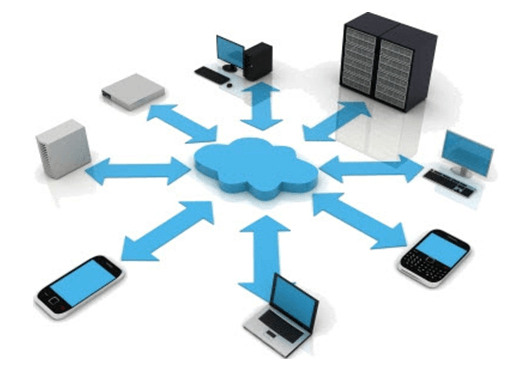
A cloud provider delivers the platform and ensures that its storage includes secure multi-tenancy features. The provider divides storage into multiple segments based on the number of users, while isolating each user from others. Each user receives a public or local IP address that acts as a gateway to access their storage, and they can apply encryption to prevent unauthorized access.
This model works similarly to secure deposit boxes in banks. The bank gives each customer a unique key and access to their own box room, without revealing who owns neighboring boxes. Security teams strictly monitor access and always ask customers about the purpose of their visit.
CCTV cameras continuously record all activities, ensuring full monitoring at all times. When customers enter the secure box area, guards verify their box number to prevent access to the wrong room. Each box uses a unique key that is difficult to duplicate.
A strong security layer plays a critical role in protecting user data in a Storage as a Service platform. Providers design this layer with two main components: public security and user-defined security. The public security layer includes firewalls, antivirus systems, and anti-DDoS protection to defend against common external threats. On the user side, customers can implement their own security controls—such as firewalls and access keys—to prevent unauthorized access within the platform.
Advantages of Storage as a Service (STaaS)
1. IT cost efficiency – You can reduce capital expenses by using an OPEX model instead of heavy upfront investments.
2. Flexibility – You can easily scale capacity and performance whenever your business needs grow, without complexity.
3. Risk transfer – You can shift infrastructure risks to the provider, allowing IT teams to focus on strategic tasks with greater peace of mind.
4. Ease of access – You can access your data anytime and anywhere through internet-connected cloud services.
5. Secure – Cloud providers implement globally recognized security standards to protect your data, often offering stronger protection than traditional data centers (though this depends on the provider).
Businesses will face serious challenges from global competition. It is no longer the time to focus primarily on IT infrastructure…what needs to be done is to prepare, but don’t make the wrong preparations.
Here is our explanation. If you want to read other articles about technology or want more information about Indonesian Cloud products, you can visit our website Indonesiancloud.com. See you in our next article.
By: Daniel Setyahadi, Sales Manager – IndonesianCloud