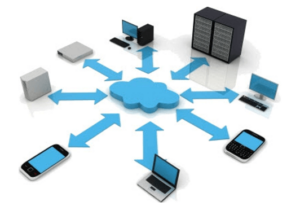
Simply put, cloud computing definition, types, and functions refer to delivering various IT services over the internet. These services include data storage, servers, databases, networking, and software. Instead of relying on local storage, users can access resources online.
As a result, cloud computing allows users to store and access files anytime, as long as they have an internet connection. Therefore, it has become a popular solution for both individuals and businesses.
In this article, Indonesian Cloud explains the cloud computing definition, types, and functions in a clear and practical way.
A Deeper Understanding of Cloud Computing
Cloud computing is called “cloud” because users access data remotely through a virtual environment. In this system, cloud providers store files and applications on remote servers. Users can then access them from any location.
Therefore, users do not need to stay in one place to manage their data. In addition, cloud computing offers flexibility in how services are delivered.
Cloud services are generally divided into three categories:
- Public cloud, which is available over the internet for general use
- Private cloud, which is limited to specific users or organizations
- Hybrid cloud, which combines both public and private environments
As a result, businesses can choose the model that best fits their needs.
Examples of Cloud Computing Usage
Cloud computing supports many everyday and business activities. For example, users can access:
- Email services such as Zimbra Mail
- Storage, backup, and data recovery
- Application development and testing
- Data analysis tools
- Audio and video streaming
In addition, cloud computing supports advanced services such as artificial intelligence and language processing. Therefore, users no longer need to interact directly with physical hardware.
Types of Cloud Computing Based on Services
Cloud computing consists of three main service models. Each model serves a different purpose.
-
Software-as-a-Service (SaaS)
SaaS delivers software applications over the internet. Users typically access these services through a subscription or pay-as-you-go model. For example, Microsoft Office 365 is a popular SaaS solution.
-
Infrastructure-as-a-Service (IaaS)
IaaS provides essential infrastructure such as servers, storage, and operating systems. Users can access these resources through the internet without purchasing physical hardware. Examples include Indonesian Cloud Public Cloud and Microsoft Azure.
-
Platform-as-a-Service (PaaS)
PaaS offers a platform for developers to build and deploy applications. Unlike SaaS, it does not only deliver software but also provides tools for development. Examples include Salesforce and Heroku.
How Cloud Computing Works
Cloud computing relies on off-site data centers and internet connectivity. These data centers host servers that store and manage resources.
These resources are pooled together to create a flexible system. As a result, users can scale resources up or down based on their needs. For example, they can increase storage during peak usage and reduce it when demand decreases.
Therefore, cloud computing offers high scalability and efficiency.
Advantages of Using Cloud Computing
Cloud computing provides more than just remote access to files. It also improves business efficiency and reduces costs.
For example, users can access files through services like Dropbox or Google Drive from any device. As a result, work becomes more flexible and efficient.
In the past, companies needed to purchase and maintain their own IT infrastructure. However, cloud computing removes this burden. Companies only need a stable internet connection to access cloud services.
In addition, cloud platforms simplify software updates. Users can download updates directly without using physical media such as flash drives.
For instance, Adobe Creative Cloud allows users to access the latest software versions through a subscription model. Therefore, updates become faster and more convenient.
Popular Cloud Service Providers
Several cloud service providers operate in Indonesia. These include:
- Indonesian Cloud
- Amazon Web Services (AWS)
- Microsoft Azure
- IBM Cloud
- Alibaba Cloud
Indonesian Cloud is a trusted provider in Indonesia. It offers flexible services based on business needs. In addition, Indonesian Cloud provides private cloud solutions designed for a single customer. Therefore, companies can ensure better security and performance.
The private cloud platforms offered include VMware, Red Hat, and Nutanix.
Conclusion
Understanding the cloud computing definition, types, and functions is essential for modern businesses. Cloud computing offers flexibility, scalability, and cost efficiency.
Although adoption requires planning, the benefits are significant. Therefore, many organizations continue to move toward cloud-based solutions.
Indonesian Cloud provides reliable cloud services, including public and private cloud options. As a result, businesses can build scalable and secure IT infrastructure without managing physical hardware.
For more information about Indonesian Cloud services, please visit our official website at indonesiancloud.com. Feel free to contact us for more information. See you in next article!