Automates the use of PCS according to the required capacity.
Fully dedicated, secure, high performance servers
Deploy fast and scalable servers for your company
Automatically scale your resource to adapt to changing demands
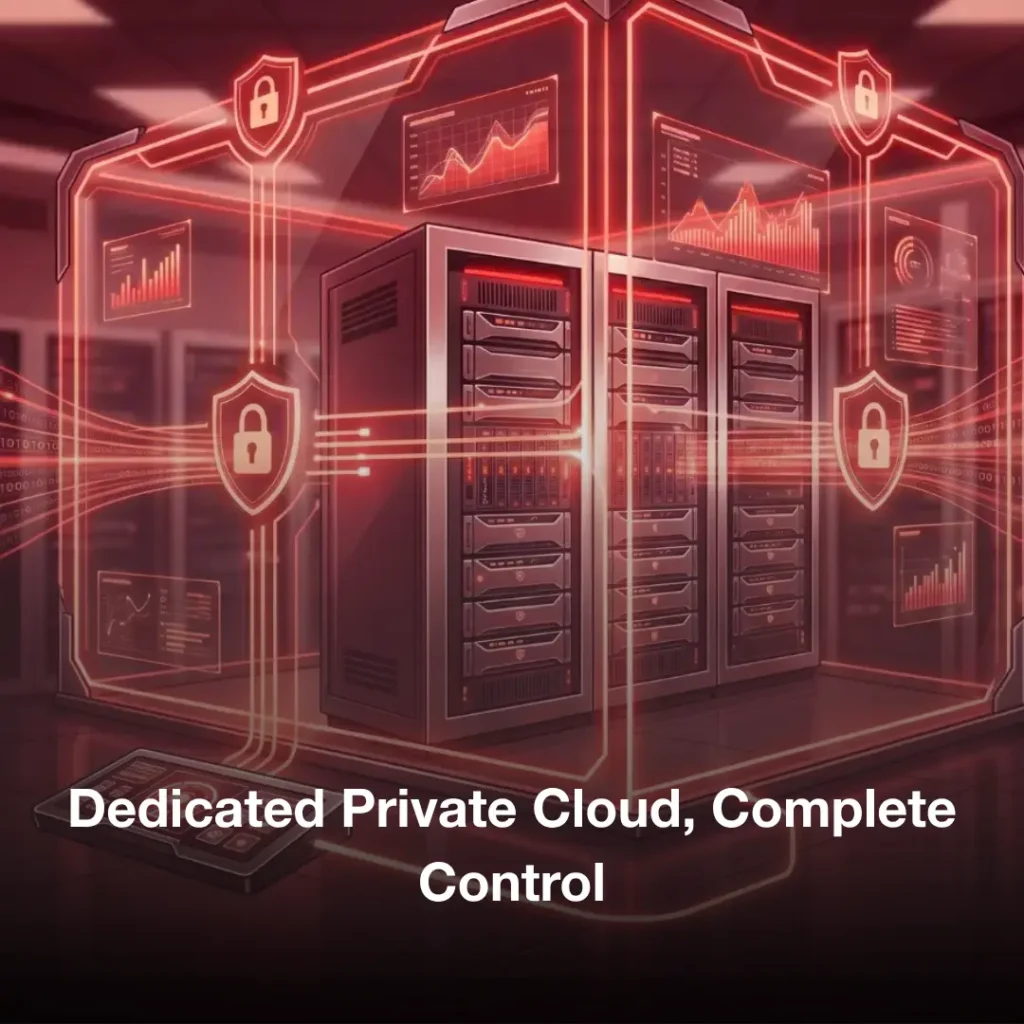
Physically isolated compute resource pools for your workloads
Boost Performance, Ensure Security.
Manage your Kubernetes service
Best scalable object storage for your company
Persistent block storage
Cloud backup for in-cloud and on-premise resource
Data Protection for cloud servers
Open source database resource to handle massive volumes of concurrent request
RDS for SQL Server is reliable, scalable, inexpensive, and easy to manage.
Open source database that ensure data reliability and integrity
Learning platform to scale up your human resource level
Manage your documents just in one secure and reliable platform
Give you the best mailing experience day to day basic
All for one, one for all, the most comprehensive package you will ever had
Make your Life More Immersive
Digitalize your credit scoring system to the next level
Check your customer credit scoring without wasting your time
Track, manage, your company asset in one click away
Application activation, offers, and automated transactions
Get the report for your brand trought your social media platform
Monitor your potential vehicle accidents and disaster with Vehicle Behavior Anomaly
Managing and overseeing Ships with Vessel Behavior Anomaly
Social Media Booster To Boost Your Digital Media Platform
Build Smart Converational Bot for Business at Scale.
Build Customer Interactions in any channels & Track and monitor any ticket from multiple channel inquiries
Create Live Conversation experience to the next level
Attract and retain Customer for ever lasting relationship
Bring your business into another level by adding new channeling
A Public Cloud Server (PCS) is a basic computing unit that consists of vCPUs, memory, an operating system (OS), and Elastic Volume Service (EVS) disks. Once a PCS is created, you can use it in the cloud in the same way you would use a local PC or a physical server. PCS supports self-service creation, modification, and operations. You can create a PCS by specifying its vCPUs, memory, OS, and login mode. After the PCS is created, you can adjust its specifications if needed. PCS also works together with other services to provide a reliable, secure, and efficient computing environment.
Why Should You Use Elastic Cloud Server?
Automates the use of PCS according to the required capacity.
Automates the distribution of access across multiple PCS instances, improving service delivery and reducing the risk of capacity-related errors.
Allows you to attach EVS disks to PCS and expand your existing storage capacity.
It allows you to create your own private network in the cloud by customizing security groups, VPNs, IP address ranges, and bandwidth, thereby simplifying network management. You can also define PCS access rules within and between security groups to further enhance PCS security.
To physically isolate your PCS instances, submit a DCC request before creating any PCS. Once the DCC has been obtained and assigned to a region, your PCS instances will be automatically allocated to that DCC.
Automate your Public Cloud Server (PCS) resource allocation with intelligent auto-scaling. Dynamically provision and adjust computing capacity in real-time based on actual workload demands, ensuring optimal performance without overpaying for idle resources.
Guarantee uninterrupted performance with automated load balancing. Intelligently route and distribute incoming traffic across multiple Public Cloud Servers (PCS) to enhance service availability, eliminate single points of failure, and mitigate the risk of capacity overloads during unexpected traffic spikes.
Dynamically expand your data architecture with Elastic Volume Service (EVS). Seamlessly attach high-performance EVS block storage directly to your Public Cloud Server (PCS) instances, empowering you to scale your storage capacity instantly and on-demand as your business data grows.
Take absolute control over your cloud network topology. Easily construct your own Private Network by customizing VPN integrations, IP CIDR blocks, bandwidth limits, and Security Groups. Streamline complex network management while enforcing strict intra-group and inter-group traffic rules, locking down your PCS instances against unauthorized access.
Achieve hardware-level security for your most sensitive workloads. By provisioning a Dedicated Compute Cluster (DCC) in your preferred region prior to instance creation, your Public Cloud Servers (PCS) are automatically deployed onto physically isolated, single-tenant infrastructure. This guarantees exclusive resource utilization and ensures strict regulatory compliance.
Public cloud is a cloud computing service provided by third-party providers (such as AWS, Google Cloud, or Microsoft Azure) and accessed via the internet. The infrastructure is owned and managed by the service provider, then shared among many users simultaneously through a multi-tenant system.
Some of the key benefits include:
In general, major public cloud providers implement very strict security standards (encryption, firewalls, ISO/SOC compliance). However, security also depends on the user’s own configuration. Many data breaches occur not due to provider vulnerabilities, but because of misconfiguration on the user’s end.
Public cloud is ideal when a business needs rapid scalability, wants to reduce upfront hardware investment, or when the team lacks the capacity to manage infrastructure independently. However, for highly sensitive data or industries with strict regulations (such as banking and healthcare), private or hybrid cloud options should be considered first.