

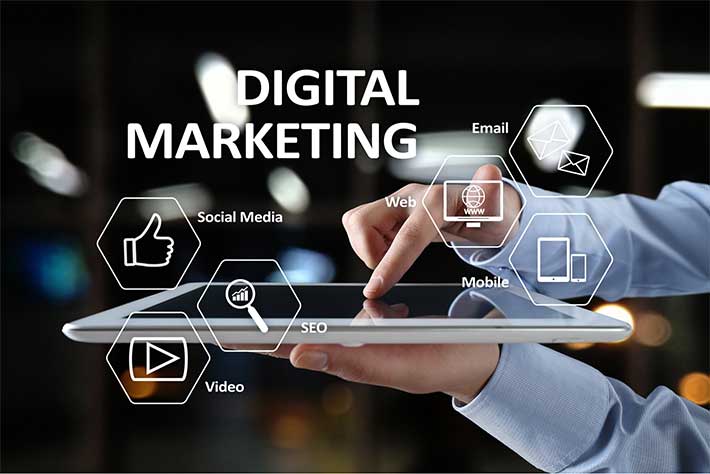
Digital marketing has become a core driver of modern business growth. Today, companies no longer rely only on traditional promotion. Instead, they use digital marketing to reach customers through online platforms.
Based on industry experience, businesses that implement digital marketing strategies correctly tend to grow faster. They reach wider audiences, measure performance in real time, and optimize campaigns efficiently.
Therefore, understanding digital marketing is essential for every business owner and marketing professional.
What Is Digital Marketing?
Digital marketing is the practice of promoting products or services using digital channels and the internet.
Unlike conventional marketing, digital marketing allows businesses to interact directly with their audience. Moreover, it provides measurable results. Companies can track clicks, engagement, and conversions instantly.
As technology evolves, digital marketing continues to expand. It now includes search engines, social media, email, websites, and online advertising platforms.
Digital Marketing Strategy: Key Approaches
An effective digital marketing strategy combines several channels. Below are the most commonly used strategies.
1. Search Engine Optimization (SEO)
SEO is a digital marketing strategy that improves website visibility on search engines like Google.
When SEO is implemented correctly:
-
Websites rank higher
-
Organic traffic increases
-
Brand credibility improves
As a result, potential customers are more likely to visit your website.
2. Pay-Per-Click Advertising (PPC)
PPC is a paid digital marketing method. Businesses pay each time someone clicks their ad.
For example, platforms like Facebook Ads allow businesses to appear at the top of search results or feeds.
Although PPC requires budget allocation, it delivers faster visibility.
3. Content Marketing
Content marketing focuses on creating valuable and relevant content. This includes:
-
Blog articles
-
Social media posts
-
Infographics
-
Videos
Through content marketing, businesses educate audiences first. Then, they build trust before driving sales.
4. Social Media Marketing
Social media marketing uses platforms such as LinkedIn and Instagram to promote products and services.
Today, social media is not only for communication. It is also a powerful digital marketing channel that builds brand awareness and engagement.
5. Affiliate Marketing
Affiliate marketing is a partnership-based digital marketing strategy. Businesses collaborate with partners who promote products in exchange for commissions.
This method expands reach without increasing fixed marketing costs.
6. Marketing Automation
Marketing automation simplifies repetitive digital marketing tasks. For example:
-
Email workflows
-
Campaign scheduling
-
Performance reporting
Because of automation, marketing teams can focus more on strategy and analysis.
7. Native Advertising
Native advertising is paid content designed to match the platform’s format. It blends naturally into user feeds.
For instance, promoted posts on social media platforms function as native advertising.
Types of Digital Marketing Channels
In practice, digital marketing operates across several channels.
Website
A professional website is the foundation of digital marketing. It builds credibility and provides detailed business information.
Without a website, long-term digital marketing performance is limited.
Search Engine Marketing (SEM)
SEM increases website visibility through paid search campaigns. Unlike SEO, SEM delivers faster results but requires ongoing budget management.
Social Media Marketing
This channel allows businesses to engage audiences directly. It also reduces promotional costs compared to traditional advertising.
Online Advertising
Online advertising includes banner ads, display ads, and paid campaigns across digital platforms. It provides quick exposure and measurable results.
Email Marketing
Email marketing remains one of the highest ROI digital marketing channels. Companies use it to:
-
Share updates
-
Promote new products
-
Offer special discounts
However, proper segmentation is essential to avoid spam issues.
Video Marketing
Video marketing helps businesses explain products clearly. It increases engagement and improves conversion rates.
Short and informative videos often perform best.
5 Key Benefits of Digital Marketing
Now, let’s explore why digital marketing outperforms conventional marketing.
1. Stronger Brand Awareness
Digital marketing builds brand visibility online. Since most consumers research products on the internet first, online presence is critical.
2. Wider Market Reach
With digital marketing, businesses can reach customers globally. Geographic barriers no longer limit expansion.
3. Faster Information Distribution
Campaigns can go live instantly. Moreover, performance can be monitored in real time.
4. Cost Efficiency
Compared to traditional advertising, digital marketing is more budget-friendly. Even small businesses can compete effectively.
5. Easier Performance Evaluation
Analytics tools provide detailed reports. Businesses can track:
-
Website visits
-
Engagement rates
-
Conversion metrics
Therefore, decision-making becomes data-driven.
Why Digital Marketing Is Essential Today
In today’s competitive landscape, digital marketing is no longer optional. It is a strategic necessity.
Companies that ignore digital transformation risk losing market share. On the other hand, businesses that invest in digital marketing gain:
-
Measurable growth
-
Stronger brand authority
-
Better customer relationships
Ultimately, digital marketing enables sustainable business development in the digital era.